
What Aave is, DeFi’s most widely used lending protocol, and how it works: a straightforward, clear guide with no technical jargon.
Aave is one of the longest-standing and most reliable protocols across all of DeFi (decentralized finance). Given its ease of use, Aave can serve as an ideal entry point for anyone looking to step into the world of lending. If that sounds like you, you’re in the right place: in this article, we explore what Aave is, how deposit and lending mechanics operate, and how you can access Aave directly through Young Platform’s DeFi Wallet.
What is Aave?
Aave is a non-custodial decentralized liquidity protocol. In plain terms: Aave is a “hub”—existing purely within the DeFi ecosystem rather than physically—where anyone can lend their crypto-assets to those seeking liquidity, and vice versa. The former are known as “lenders” (from to lend), while the latter are known as “borrowers” (from to borrow).
Because Aave is a DeFi protocol, it operates “automatically”: there are no physical branches or manual approval desks. Everything runs via smart contracts—programs hosted on the blockchain that enforce transparent, uniform rules for everyone, executing automatically as soon as predetermined conditions are met.
Aave has operated uninterrupted for over 6 years and ranks among the most thoroughly vetted and audited protocols in the industry.
How are yields generated on Aave? Lending
The short answer: through lending, meaning by supplying your crypto-assets. Let’s break down what this actually looks like.
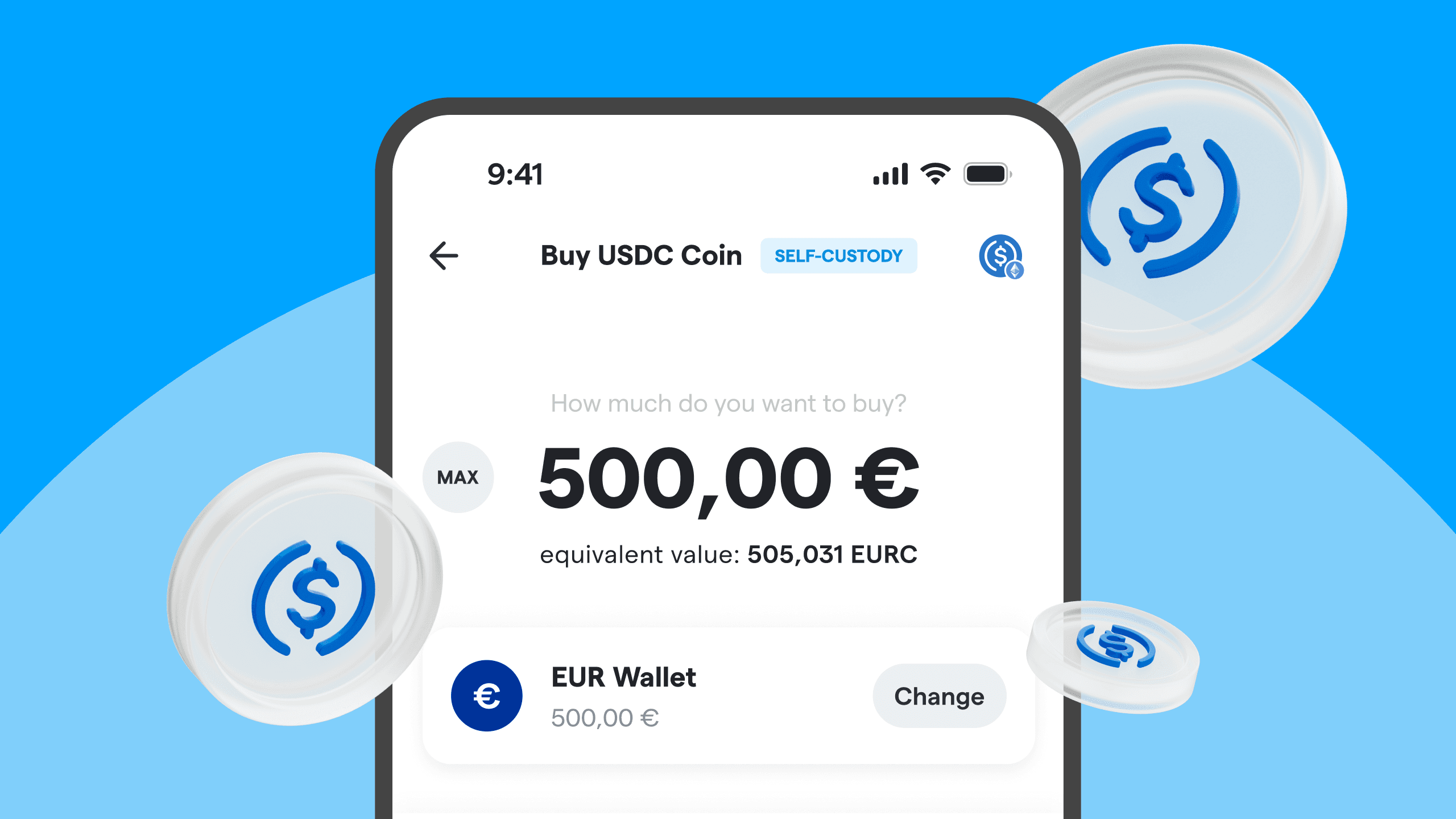
Imagine holding idle stablecoins (EMTs), such as USDC (USD Coin), in your wallet: you decide to deposit them into an Aave liquidity pool to make them available to users in search of capital.
From that moment on, the stablecoins you deposited begin accruing rewards, paid directly by borrowers. In return for your deposit, you receive aTokens: in this scenario, you would receive aUSDC because you deposited USDC.
You can think of aTokens as a digital receipt: they represent your underlying share in the pool and grow in value as they generate rewards.
Want to reclaim your USDC? You simply return your aTokens to the protocol: you receive your initial principal back along with the rewards accrued over time.
There is no maturity date: you can withdraw whenever you wish, subject to available liquidity in the pool.
How does borrowing work? A guide to borrowing
On the other side of the trade, there are those who supply funds (the lender) and those who borrow (the borrower). Borrowers are participants who need immediate liquidity but want to avoid selling their crypto-assets for various tax, strategic, or personal reasons.
If you find yourself in this situation, you can access Aave and borrow stablecoins directly from the protocol.
Borrowing naturally requires depositing collateral, designed to shield lenders against borrower default risk.
This means you must deposit an alternative crypto-asset to serve as a security guarantee that repays the lender should you fail to repay the borrowed capital. For instance, you might deposit Ethereum as collateral to borrow USDC or another stablecoin.
Here, it is crucial to understand LTV (Loan-to-Value), a metric defining the ratio between the loan and the collateral—meaning how much you can borrow relative to the market value of the asset you deposited as security. For example: if you deposit 1 BTC in collateral and borrow the equivalent of 0.6 BTC in USDC, your LTV is 60%.
How do yields work on Aave? Variable rewards rates and the “health factor”
On Aave, rewards rates are not fixed, but variable, driven dynamically by the utilization rate of each individual liquidity pool. The mechanic is straightforward and follows basic supply and demand: the higher the borrowing demand for an asset relative to its available supply, the higher the rate rises, and vice versa.
This dynamic serves a precise function: compensating those supplying liquidity to the protocol and incentivizing new deposits. That is why deposit yields on Aave fluctuate over time.
What is the health factor?
For anyone taking out a loan (the borrower), there is a built-in safety metric known as the health factor: a numerical score evaluating the safety of your collateralized position relative to the value of your debt. How does it work?
In short: if the value of your collateral drops too low and the health factor falls below 1, your position may be liquidated. A portion of your collateral is automatically sold off to repay the debt and protect the lender.
Think of it as a traffic light:
- Greater than 1: all clear, position is healthy
- Less than 1: red light, stop → liquidation triggered
Aave V3, isolated markets, and GHO
The current version of the protocol, Aave V3, introduced several enhancements in terms of efficiency and security.
Among them, the most noteworthy is Isolation Mode, “a feature designed to safely onboard newer or volatile assets to the protocol by restricting their utility as collateral.” Concretely, “when an asset is designated as an Isolated Collateral Asset, it can only be used to borrow specific stablecoins approved by Aave Governance.” The objective of Isolation Mode is clear: to curb systemic risks tied to volatile assets.
Aave also features its own native decentralized stablecoin, GHO, pegged to the US Dollar and integrated across the protocol’s ecosystem.
Young Platform’s DeFi Wallet
Aave is among the protocols available within Young Platform’s DeFi Wallet, directly accessible inside the app and designed to make the decentralized finance experience intuitive even for newcomers.
With the DeFi Wallet, you can deposit your stablecoins and explore lending on the protocol highlighted in this article. Because deposit yields on Aave fluctuate, they are displayed inside the app both as a 30-day moving average and as an estimated net return: this provides a realistic benchmark rather than an instantaneous number subject to sudden swings. You can track updated yields directly in the DeFi section of the app.
Important note: Young Platform’s DeFi Wallet is non-custodial (self-custody). This means that you retain complete custody of your funds via a wallet for which you alone hold the access credentials.
If you would like to learn more, check out our dedicated article: What is the Young Platform DeFi Wallet?
In summary
Aave is the most widely adopted protocol in DeFi: you can deposit crypto-assets to generate yield, or borrow them by locking collateral and paying rewards. Everything is automated and transparent, with variable rewards rates driven by real-time market supply and demand. Aave provides an accessible entry point for exploring DeFi lending, and can be navigated seamlessly right from Young Platform’s DeFi Wallet.
Risk disclosure
The DeFi Wallet is a self-custody tool operating outside the scope of the MiCAR regulation. Because this is a non-custodial wallet, Young Platform does not hold your private keys and has no access to your funds at any time: you maintain sole responsibility for their custody. Consequently, Young Platform cannot recover your funds in the event of user error, lost access credentials, transfers to incorrect addresses, or improper transactions.
Crypto-assets represent highly volatile, high-risk financial instruments. To review all associated operational and financial risks, consult the DeFi Wallet Risk Disclosure and the Service Terms and Conditions. Lending returns are variable, not guaranteed, and subject to protocol and smart contract risk. This guide is provided for educational and informative purposes only and does not constitute financial advice, investment recommendations, or an offer to buy financial instruments. Always evaluate your personal risk tolerance before participating.
Related Article

Download the Young Platform app